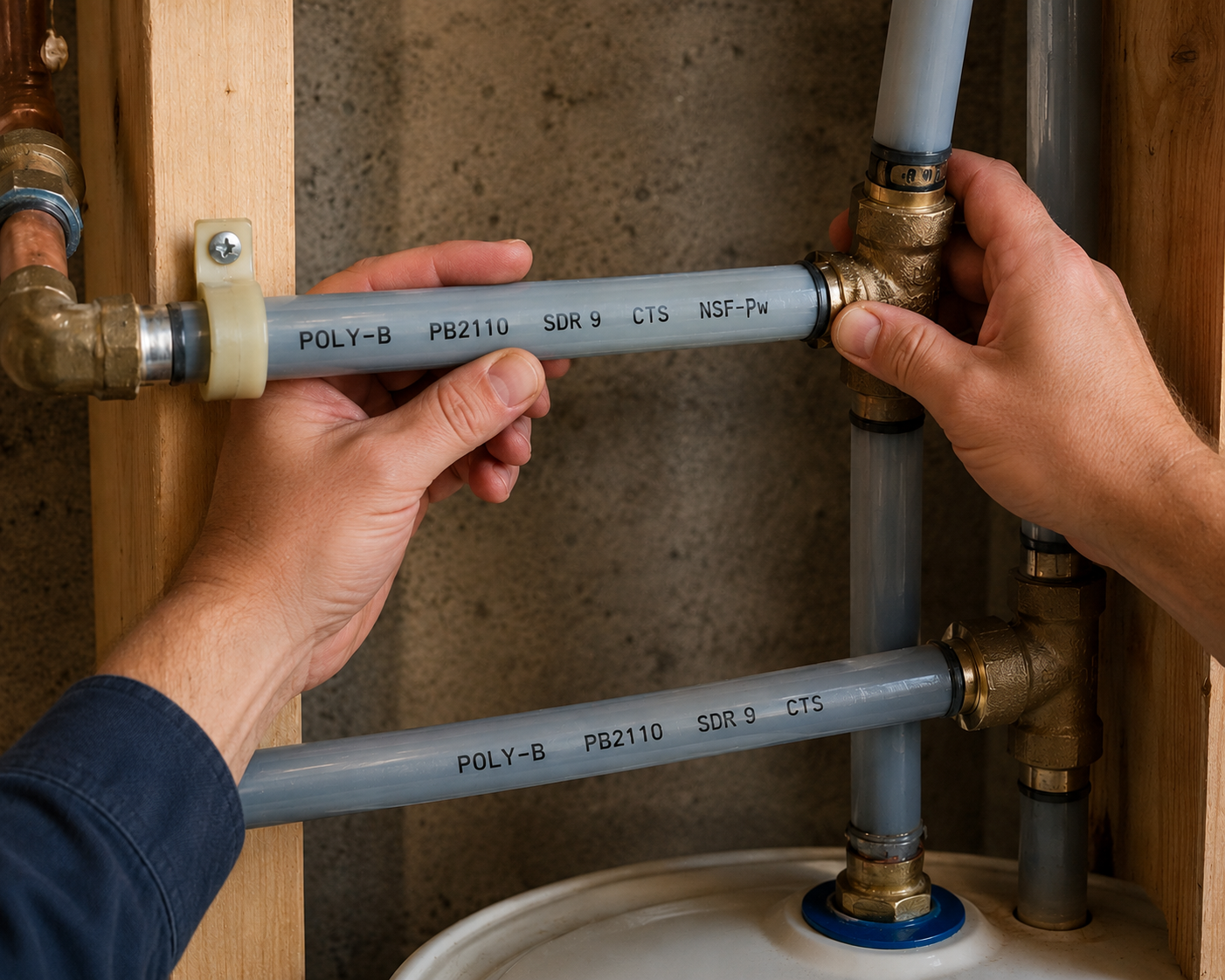
If you're buying or selling a home in Metro Vancouver, there's a good chance you'll hear the term Poly B plumbing come up during the process. Many homes built in the 1980s and 1990s were constructed with polybutylene piping, commonly known as Poly B.
At the time, Poly B was a popular choice for builders. It was lightweight, flexible, less expensive than copper, and quick to install—making it an attractive option during a period of rapid residential growth.
Over the years, however, concerns emerged about the material's long-term durability. Poly B can react to chemicals commonly found in treated municipal water, particularly chlorine. As the pipes age, this can cause the material to become brittle and more susceptible to cracking or failure.
Another concern involves the fittings used in many Poly B systems. Acetal (plastic) insert fittings were widely used and became one of the primary causes of leaks and failures. In fact, issues related to these fittings played a significant role in the decline of Poly B plumbing and the lawsuits that followed.
One of the challenges with Poly B is that deterioration often happens from the inside out. The pipes may appear perfectly normal on the outside while gradually weakening internally, meaning there may be little warning before a leak develops.
So, what does this mean when buying or selling a home?
For buyers, Poly B plumbing isn't necessarily a deal breaker. Many homes with Poly B have performed well for decades without any issues. However, because these systems are now aging, buyers often view replacement as a future maintenance item and may want to better understand the condition of the plumbing before moving forward.
For sellers, knowing whether your home contains Poly B plumbing can help you prepare for questions that may arise during a home inspection. Being upfront about the plumbing system and providing information about any repairs or upgrades can help create confidence and avoid surprises later in the transaction. If you're unsure what type of plumbing your home has, a qualified plumber or home inspector can help identify it.
Insurance is another consideration. Some insurance companies may ask additional questions about Poly B plumbing, charge higher premiums, require inspections, or limit coverage options. While coverage is often available, homeowners may have fewer insurers to choose from.
The good news is that Poly B plumbing doesn't automatically prevent a home from being sold or insured. The key is understanding what is present, being transparent about it, and planning accordingly.
Whether you're buying, selling, or simply maintaining your home, awareness is important. Knowing if a property contains Poly B plumbing allows for informed decisions, realistic expectations, and smoother transactions for everyone involved.
At the time, Poly B was a popular choice for builders. It was lightweight, flexible, less expensive than copper, and quick to install—making it an attractive option during a period of rapid residential growth.
Over the years, however, concerns emerged about the material's long-term durability. Poly B can react to chemicals commonly found in treated municipal water, particularly chlorine. As the pipes age, this can cause the material to become brittle and more susceptible to cracking or failure.
Another concern involves the fittings used in many Poly B systems. Acetal (plastic) insert fittings were widely used and became one of the primary causes of leaks and failures. In fact, issues related to these fittings played a significant role in the decline of Poly B plumbing and the lawsuits that followed.
One of the challenges with Poly B is that deterioration often happens from the inside out. The pipes may appear perfectly normal on the outside while gradually weakening internally, meaning there may be little warning before a leak develops.
So, what does this mean when buying or selling a home?
For buyers, Poly B plumbing isn't necessarily a deal breaker. Many homes with Poly B have performed well for decades without any issues. However, because these systems are now aging, buyers often view replacement as a future maintenance item and may want to better understand the condition of the plumbing before moving forward.
For sellers, knowing whether your home contains Poly B plumbing can help you prepare for questions that may arise during a home inspection. Being upfront about the plumbing system and providing information about any repairs or upgrades can help create confidence and avoid surprises later in the transaction. If you're unsure what type of plumbing your home has, a qualified plumber or home inspector can help identify it.
Insurance is another consideration. Some insurance companies may ask additional questions about Poly B plumbing, charge higher premiums, require inspections, or limit coverage options. While coverage is often available, homeowners may have fewer insurers to choose from.
The good news is that Poly B plumbing doesn't automatically prevent a home from being sold or insured. The key is understanding what is present, being transparent about it, and planning accordingly.
Whether you're buying, selling, or simply maintaining your home, awareness is important. Knowing if a property contains Poly B plumbing allows for informed decisions, realistic expectations, and smoother transactions for everyone involved.